
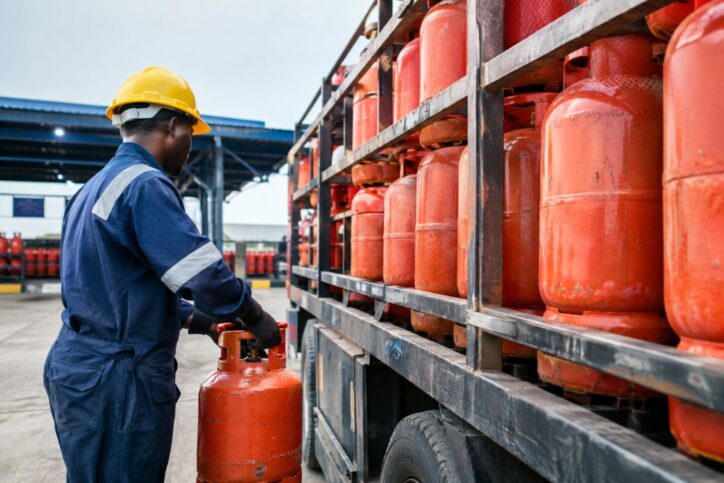
LPG Supply in Nigeria: A Guide for Businesses
For many businesses in Nigeria, energy is not simply another line on the monthly budget. It can determine whether a restaurant opens on time, whether a manufacturing process runs consistently, or whether an organisation can maintain reliable day-to-day operations.
That is one reason Liquefied Petroleum Gas, commonly called LPG or cooking gas, has become increasingly relevant to Nigerian businesses. LPG is used across different parts of the economy, from hospitality and food services to manufacturing and other commercial applications. Its relatively clean-burning characteristics also make it an interesting part of Nigeria’s broader transition towards cleaner energy sources.
However, buying LPG for business purposes is not simply a matter of looking for the lowest available price. Supply reliability, product quality, regulatory compliance and the credibility of the supplier all deserve attention.
Understanding LPG Supply in Nigeria
LPG consists primarily of propane and butane. It is stored as a liquid under pressure and becomes a gas when released for use. That characteristic makes it relatively convenient to transport and distribute, but it also means that LPG requires appropriate infrastructure and responsible management.
Nigeria’s LPG market has grown considerably, with the product becoming more visible in both household and commercial energy consumption. For businesses, the attraction is fairly straightforward: LPG can provide a dependable energy option while producing less soot and fewer emissions than some traditional fuels.
Still, the Nigerian market has its complications. Prices can change, availability can vary by location, and logistics can affect the final cost paid by a business. A supplier that looks inexpensive at first may not necessarily offer the best overall value if deliveries are inconsistent or communication becomes difficult when market conditions change.
Why LPG Supply Reliability Matters to Businesses
Imagine a busy commercial kitchen preparing for a Saturday afternoon rush. Running short of an essential energy source is not merely inconvenient. It can affect production, customer service and revenue.
The same principle applies to larger organisations. Energy interruptions can disrupt schedules and create costs that are difficult to recover.
For that reason, businesses evaluating LPG suppliers should think beyond price. Questions around supply consistency, communication, delivery capability, product quality and regulatory compliance are arguably just as important.
A dependable supplier should understand that commercial customers are not simply purchasing a commodity. They are trying to protect business continuity.
What Businesses Should Look for in an LPG Supplier
1. Reliability
Reliability should probably come first.
A supplier’s ability to maintain consistent service is particularly important for businesses whose operations depend heavily on energy. Look for a company with an established supply network and experience serving commercial customers.
Reeve Energy, for example, describes its business as focusing on refined petroleum-product logistics, trading and distribution, including LPG. The company operates across Lagos, Abuja, Port Harcourt and Ilorin.
2. Regulatory Compliance
LPG is a regulated petroleum product, so businesses should take compliance seriously when selecting suppliers and service partners.
The Nigerian Midstream and Downstream Petroleum Regulatory Authority, NMDPRA, maintains dedicated systems covering LPG-related activities, including LPG refilling plants, retailers, gas depots and other gas infrastructure.
For a business customer, this means supplier credibility matters. It is sensible to work with established companies that take regulatory and safety requirements seriously rather than making purchasing decisions solely on the basis of price.
3. Product Quality
Price is easy to compare. Quality and consistency are somewhat harder.
Businesses should therefore consider whether a supplier has appropriate quality-control processes and a clear commitment to meeting applicable standards. A cheaper supply arrangement is not necessarily economical if inconsistent quality creates operational problems.
4. Supply Chain Capability
Nigeria’s geography creates its own logistical challenges. Supplying a customer in Lagos is different from serving one in Port Harcourt, Abuja or Ilorin.
A supplier with broader distribution capability may be better positioned to support businesses operating across multiple locations. Reeve Energy states that its distribution network serves customers across several Nigerian cities and that its operations cover LPG alongside automotive gas oil and aviation turbine kerosene.
5. Customer Service
This one is sometimes overlooked.
When energy prices move or supply conditions become complicated, a business needs to be able to reach its supplier and receive clear information. Good communication can make an otherwise difficult situation considerably easier to manage.
For commercial customers, the relationship with an energy supplier should therefore be more than a simple transaction.
LPG Supply and Business Cost Management
Energy costs can have a noticeable effect on operating expenses, particularly for businesses with substantial energy requirements.
LPG may offer advantages in certain applications, but businesses should avoid assuming that switching fuels will automatically reduce costs. The economics depend on the nature of the operation, consumption patterns, market prices, logistics and the infrastructure already available to the business.
A sensible procurement decision therefore looks at the total cost of energy, rather than simply comparing the advertised price of a product.
That distinction matters.
The cheapest quotation is not always the cheapest option once reliability, logistics and business interruption are considered.
The Role of LPG in Nigeria’s Energy Future
Nigeria’s energy conversation is becoming more diverse. Traditional petroleum products remain important, while natural gas, LPG, CNG, renewables and other energy sources are increasingly part of the discussion.
LPG occupies an interesting position within that mix. It is not a perfect solution to every energy problem, nor should businesses treat it as one. However, its relatively clean-burning characteristics and established commercial applications give it a meaningful role in the country’s evolving energy landscape.
For businesses, the more useful question may therefore be less about whether LPG is universally “better” and more about where it makes commercial and operational sense.
Choosing a Trusted LPG Supply Partner
Ultimately, businesses need more than access to LPG. They need confidence that their energy supplier understands the realities of operating in Nigeria.
That means dependable supply, attention to quality, regulatory awareness, responsive customer service, and the capacity to support customers as their requirements change.
This is where Reeve Energy positions itself.
Reeve Energy Limited is an independently owned Nigerian energy company focused on downstream petroleum-product marketing and logistics. Its portfolio includes premium-grade LPG, Jet A1, Diesel, and PMS. The company’s supply operations are built around reliability, product quality, safety, regulatory compliance, and customer service.
For businesses looking for an experienced and dependable energy partner, Reeve Energy offers a tested and trusted option for petroleum-product supply across Nigeria.
Whether the requirement involves LPG, AGO, or aviation fuel, the underlying principle remains the same: reliable energy supply should support the business, not become another source of uncertainty.
With its focus on supply-chain efficiency, customer relationships, and downstream energy services, Reeve Energy is positioned to help Nigerian businesses manage their petroleum-product requirements with greater confidence.
If you would like tailored advice or a competitive quote for your fuel requirements, request a quote today, and our team will help you get exactly what you need.